bgfay

still haven’t run out of ink

  • Home
  • About Me
  • Reading
  • Records
  • Blog Index
A brief, lovely, and sad read.

A brief, lovely, and sad read.

Ready For Oliver Sacks

October 02, 2018 by Brian Fay in Reading, Whatever Else

I've been looking for a way into reading Oliver Sacks.

When his last essays were published in The New York Times I was still learning to live with the sudden, abrupt death of my father. I knew that Sacks had been diagnosed, sentenced really, and that his death was imminent. My father's death was so recent, as if it was still happening again and again, I couldn't imagine delving into the last days of another man. There's a line in Hayden Carruth's great and wise poem "Regarding Chainsaws" that expressed all this better than I can:

...About then
I quit stopping by to see old Stan, and I
don't feel so good about that neither. But my mother
was having her strokes then. I figured
one person coming apart was as much
as a man can stand. Then Stan was taken away
to the nursing home, and then he died.

My father had come apart and that was more than I could stand. Then Oliver Sacks was diagnosed, and then he died. His auto-biography On The Move came out and I heard all about it but couldn't get myself to read it. Through proximity on the calendar, his life and death had become too connected with the life and too soon death of my father.

All my life I've been around death. Dad was a funeral director and when I was ten he bought the funeral home in which I mostly grew up. That is, I spent most of my childhood there and I mostly, but not totally, grew up. The dead lay in their boxes in the funeral home which was connected by three separate doors to our house. The living were there too, both my family and the families of those who had lost their mother, father, and God help us their children. I helped Dad in the funeral home and sometimes closed the lids on the caskets before they were taken to the cemetery and buried or to the crematorium and incinerated.

That contact provided me with far less understanding of death than might be expected. I accepted the logic of it, but death lives mostly beyond the bounds of logic. My only real experience with the fullness of death was when, as a young man, I held my dog while the veterinarian put her down. It took far too long for her breathing to stop and her eyes never did close. Only when the vet said that she was gone did I allow myself to break down, staring into her brown eyes. Even then it was a halting and broken kind of grief that didn't heal me. It left me wanting, needing really, some way to get through.

When my father died, I never really cried or got to any release of all that terrible pressure, much as I tried. Grief didn't consume me so much as rise up around my body like a black fog, an almost liquid through which I found it difficult but not impossible to move. I wanted it to be worse. I wanted to break down, but grief didn't disable me other than when I was alone at Wegmans. There, for some reason, I pushed the cart haphazardly, walking across the whole store to frozen foods for one item, remembering something I needed to get in produce all the way back. I walked the length and breadth of that store in a tunneled fog, the periphery of my vision lost, my way forward clouded. It was as if Wegmans was a kind of purgatory.

It became the space where I was no longer in a world without my father but neither was I gone from the world of my wife, children, and family. I was between. For months I visited Wegmans by myself to be lost there for an hour, crossing and recrossing the store as if looking for something or mapping it for some kind of crossing. I visited Dad. I wondered about the nature of life. I bought bananas, frozen pizza, and six-packs of beer.

It's been almost a year since Wegmans has felt like anything but a grocery store. It has been three and a half years since my father died. It's just three years since Oliver Sacks died, and today I borrowed a slim library book containing four of his essays. Gratitude it is called and I am grateful for having read it, for still thinking of my father dearly but no longer with such a burden of sorrow and loss, and for the idea that I may finally be ready to hear more from Oliver Sacks. I'm ready to hear what he might have to tell me about living, a business in which I'm still occupied even as he and Dad have moved on from that into what I can't even begin to imagine.

October 02, 2018 /Brian Fay
Dad, Oliver Sacks
Reading, Whatever Else
4 Comments
My comfy little writing nook. Dictionary front and center.

My comfy little writing nook. Dictionary front and center.

Nearness Of A Dictionary

October 01, 2018 by Brian Fay in Analog Living, Writing

An earlier version of this piece appeared on Medium in September 2016. I also published another piece about dictionaries. It's a topic from which I can't seem to stay away.


Clear space on your desk and set an open dictionary there. Your writing life will improve immediately. At my writing desk in the the basement a dictionary lies open in front of me. I write by hand or type on a laptop or typewriter with that dictionary open to whatever word I last consulted. The dictionary, open at your desk, unavoidable, will change your writing life for the better.

Maybe you worry that page turning and searching will take time away from writing. Wouldn't it be better to just Google definitions?

Yes, using the dictionary takes time away from tapping keys and pushing a pen, but that’s good. Taking time for Facebook is bad. Looking through the dictionary has me thinking of words, finding new words, and returns me to words I've forgotten. I looked up sanguine to be sure that it described how I felt about the neighbor’s tree falling through our fence into the yard, and the definition helped shape the next few hundred words I wrote.

Browsing a record shop, I inefficiently flip through albums A to Z. Brushes with other records suggest new music and lead me into serendipity. Looking for one album, I find so many more.

Asking my phone to “define sanguine” brings up the definition and history in 0.40 seconds but only for that one word. In my dictionary sanguine is the last word on page 1041 which begins with sand, continues through sandalwood, sandhi, sandjack, sangfroid, sanguinaria, before ending at sanguine. Looking for page 1041, I passed saleroom, salt, and Samaritan and thought about the Good Samaritan, remembered a Slate.com article about salt in food, and wondered what the hell a saleroom is. None of that relates to how I felt about the fallen tree and crushed fence but had me feeling writerly. All because of the nearness of the dictionary.

I put a dot next to sanguine and every other word I look up curious when I'll return to that page. The dots amuse me when I find them again. I wonder what I was thinking and writing when I looked up that word. Occasionally, I look up a word I've previously dotted, the meaning having escaped me. I reread, add a second dot, and leave the dictionary open to that page as I go back to writing.

Leaving it open encourages my habit of using the dictionary. A closed dictionary likely remains closed. An open dictionary is a writer's friend and aid. It is also a little bit magical.

Using the dictionary is slow. Like handwriting, it makes words physical, slower than digital impulses. It has me taking time with the words.

Which dictionary you use doesn’t matter much so long as it lies open near your desk. Mom got me this Webster’s for college, so that’s what I use. Maybe your Mom gave it to you or some professor required one for class. If you lack a dictionary, they can be had cheap at a used book store, garage sale, or library book sale. Ask friends who don't write if you can have theirs.

Get a dictionary. Place it open on your writing desk where you will be unable to avoid it. Look up sanguine or maybe saleroom. Read the definitions. Put a dot next to it. Survey the words near it. And enjoy your improved writing life.

October 01, 2018 /Brian Fay
Dictionary, Analog
Analog Living, Writing
Comment
Screenshot 2018-09-30 at 11.19.27 AM.png

Two Emails

September 30, 2018 by Brian Fay in Whatever Else

It's easy for me to get down about things. I'm in the middle of several problems at my job including one in which the school system is charging me a quarter per page for copies of a 147-page document. It's tough not to read that as snotty and mean. Maybe it's standard policy, but it's no way to treat people. My younger daughter has a nasty cold that's in her lungs now and which hasn't much responded to antibiotics. My older daughter is disappointed with her swimming at the last couple meets and befuddled by what's going on. I don't have solutions and struggle with not being able to fix things. It all brings me down.

Then I got a couple emails.

One was from a friend with whom I haven't spoken in years. We grew apart and he and his family moved away. Things just kind of fizzled. He sent a note catching me up and reading it I saw that he has had a more difficult time of things than I have, by far. As I read, I kept wondering, how do I respond to this when my life is so good? I don't want to be an ass and rub my blessings in anyone's face, but I keep being blessed and both his email and my response to it left me in wonder at how well things are going.

The second email was from another friend who lives with his wife in a country violently coming apart. I've been concerned for their safety and am relieved that they are preparing to move to Syracuse, but his wife's family, who are from that country, will remain behind in the midst of all that violence. I can't imagine having to leave my family behind like that, but there are few good choices. He asked if I could look at an apartment here in town for them. I not only had the time to do that, it was easy and showed me again how good I have it.

My daughter has a cold, my other daughter swam a fraction of a second slower than last week, management is miserly and punishing, but none of these things are overwhelming. We will take one girl to the doctor, tell the other to relax and just swim with joy, and I'll play $36.75 for copies and live to fight another day.

The problems aren't the takeaway from all this. It's the blessings that become clearer with each passing moment, too many of them to count.

September 30, 2018 /Brian Fay
good news, blessings
Whatever Else
2 Comments
The very model of a modern major national treasure.

The very model of a modern major national treasure.

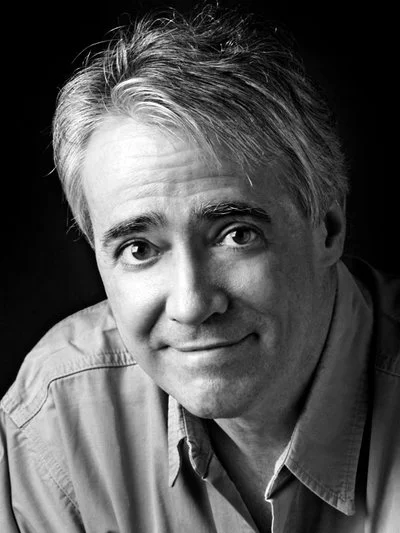
Scott Simon

September 30, 2018 by Brian Fay in Listening, Writing

I don't listen to a lot of NPR any more because I prefer to read the news, but I often check the NPR website and I try to keep up with Scott Simon's weekly essays. Simon is a national treasure and should you require proof, his program from the week after September 11, 2001 is most beautiful and moving.

Much more recent is his essay about Christine Blasey Ford's testimony to the congressional committee considering a Supreme Court nominee. I found Ford's testimony moving and convincing. I find Simon's essay artful, graceful, and a spot-on consideration of the testimony and the ways in which we should be thinking about sexual assault.

Simon is kind. There can never be too much kindness in this world. He is a thoughtful writer, speaker, and thinker. If you're not reading or listening to his weekly essay, I can't recommend enough that you seek him out and pay attention. In these times, we need more Scott Simon and less of so much of the other news.

September 30, 2018 /Brian Fay
NPR, Scott Simon, News
Listening, Writing
Comment
  • Newer
  • Older

Subscribe to my weekly newsletter!