bgfay

still haven’t run out of ink

  • Home
  • About Me
  • Reading
  • Records
  • Blog Index
Limits.jpg

The Limit As The Runner Approaches Fifty

July 17, 2018 by Brian Fay in Running

I'm sipping a cold brew coffee and listening to Santana without a shirt on. It's hot enough to have all the blinds down, hot enough we dream of air conditioning but not so hot we actually succumb to the temptation. It was mostly this hot at 7:55 this morning when I parked the truck outside the high school pool entrance, watched my daughter go in for practice, and set off down the road at a trot. Coming off two days without running, my legs didn't feel like my own. I told them what to do, but didn't feel connected to them. 

I need to be connected to them. Sure, all of us need that, but I'm planning a 50-mile run the day before my 50th birthday. That gives me a big push to know my body in ways I haven't before. I'm not trying to get back to when I was as a younger man or boy. Then I didn't pay much of any attention to my body. I expected it to do things, and it usually did them. I didn't expect a four-minute mile, but of course I could play basketball for hours, hike a mountain trail, and simply keep going. I still expect those things, but as I approach 50, I'm also approaching limits. 

I don't think of limits as fences, barriers, or walls. I imagine the limits I learned in Calculus where a limit is the value that a function (or sequence) 'approaches' as the input (or index) 'approaches' some value. 

Instead of a wall to hit, I keep approaching limits at a slower and slower rate. Imagine the graph y=1/x (which, if we were still in Calc class, would be written f(x)=1/x). Try it. Find a piece of your kid's graph paper and start at x=1. You'll put a point at (1,1) because 1/1 = 1. Move to x=2 and put your point at (2,1/2). Keep going out to about x=5 which gives you (5,1/5) and you'll see that you have a curve sloping down toward the axis. If you had an infinitely sharp pencil and infinitely sharp eyes (something I lack at almost 50), you could go on infinitely and still never hit the x-axis. For all intents and purposes, your line hits the x-axis even though logically it never can. The limit as x approaches infinity approaches zero, but never quite gets there. (My crude sketch of this function is at the top of this post.)

Just for fun, move the other way on the graph. Go to x=1/2 and plot a point at (1/2, 2). Follow that with (1/3,3), (1/4,4), and (1/5,5). As you move closer to the y-axis, the graph goes up. The limit, as x approaches zero, approaches infinity. Cool. 

Unlike limits, I'll approach and hit 50 then go through it for many years, God willing. No limit there. Simple linear arithmetic. 

Okay, back to running and approaching 50. Remember, as a kid I expected my body to just do whatever I wanted. As a catcher in little league, I expected that I could and would throw down to second base with enough velocity and accuracy to pick off any kid who hadn't gotten a good jump against my pitcher. At one practice when I was 11 or 12, our coach lined three kids at first base, a pitcher threw, and the first kid tried to steal second. I threw down and picked him off. The pitcher threw again, the next kid took off, I threw down and almost got him. It went like that for an hour. I went home with my right arm feeling like it might fall off and was pretty sure it was three inches longer than my left, but knew that I would throw down to second the next day and do it better. My job was to pick off runners and I did it. No question. 

This morning, with my daughter at swim practice for two hours, I chose to do two five-mile loops of the course I'll run ten times August 25th. It was hot, my legs felt connected to someone else's body, and I remain twenty pounds too heavy. Still, I know ten miles is within my limits and fully expect that so too is fifty. No matter that I felt lousy for the first mile and a half. I knew I would loosen up and I did. After five miles, I was worn down but not worn out. I had something left and went for a second loop.

On a graph, I'm at x=49.9 years, on a line with arrow, what's called a ray, except those go on forever. I'm not theoretical, so eventually my line will end as my father's did three years ago, but for now mine goes on. I'm pushing forward. My limits all seem theoretical. 

The loop on which I run has two tough hills and two minor ones. It's a fairly easy five-mile run, but will be challenging for ten circuits. I could map a flat course, but I want hills. They are a chance to investigate the limits. 

There is a chance I'll come up hard against a limit. I thought about that today as I tried to cut into my time. I'm not a fast runner, but with two miles to go and the hills behind me, I was averaging 12:06 per mile. Could I get below 12? I picked up the pace. Three blocks later I was at 12:05. I kept pushing toward a 12-minute average pace.

I think about records such as Roger Bannister's first-ever four-minute mile, run in 3:59.4. Amazing. But of course that record has been broken and broken and broken since. The current mark is Hicham El Guerrouj's 3:43.13, a full 1.26 seconds faster than the previous record set six years prior. Records will always be broken, yet the mile cannot be run in zero seconds. There are limits, but no one knows what they are. The science used to say a woman's uterus would fall out during a marathon. And before Bannister, many believed a four-minute mile was impossible. 

No human will ever run a two- or even a three-minute mile. But 3:30? Sure. It probably won't be in my lifetime, but then again there's Bob Beamon who beat the long-jump record by nearly two feet. Tell him about limits. We just don't know. 

I'll never run a four-minute mile. I have no expectation my body is meant for such things. When I mention that I'll soon run 50 miles, people shake their heads. "You're crazy." Maybe, but it doesn't feel like that. I've simply decided my body can do it. I have some history with distance: the half-marathon, a 50K. I understand pacing and perseverance. It may be that I can't run 50 miles this August, but I doubt I'll see it as a limit. I'll just need better preparation, milder conditions, or a flat course. My body can do this. I'm pretty sure. 

Pretty sure is as far I get until I do it. I did ten miles today despite weird legs and high temperatures. I'm preparing, testing my limits. Two miles from the end, my watch read 12:06 per mile. I pushed through 12:05, 12:04, 12:03, 12:02, 12:01. In the last mile I knew I would beat 12:00. I smiled. My shorts were so wet with sweat, it was as if I'd jumped in the pool. My heart beat at the upper limit of my training zone. My right arm hurt due to an old neck injury (perhaps all those throws down to second base), but I kept going. 12:01, 12:00, and 11:59. I smiled again but kept going.

Back at the pool within my two-hour window (I hate to keep my daughter waiting), my watch read 11:55 per mile for 10.2 miles. Too tired to celebrate, I nodded and blew air from my lungs. What's to celebrate? My body did what I supposed it could do. I pushed the limit a little closer, but there remains daylight between the line of my life and the axis of termination. I tell you, these limits, it's almost as if they go on forever. 

July 17, 2018 /Brian Fay
Limits, Aging, Midlife
Running
You.jpg

Never Write In The Second Person

July 16, 2018 by Brian Fay in Writing

You've got to show them something. It isn't as if the deadline is breaking news. You've been thinking about it for weeks, panic settling in like sand falling through the hour glass, running out of the top, the bulb almost empty, falling down in a pile that seems as if it's burying you. All you have to do, you tell yourself, is write something. Almost anything will do. Except you don't really believe that last bit. It has to be good. Or maybe it just has to be good enough. It has been weeks since you've written good enough. 

It isn't that you haven't tried. You've got beginnings, half a dozen of them, maybe more. You've even got a big idea to write about—more than one—and it should carry you through. It should work. You can imagine reeling it off in one big push as you so often have. You're set to go. You know the routine. You sit down, committed, and you work it through. But eight hundred words in—sometimes sooner, sometimes later—you run out of steam, hit the wall, peter out, or whatever you're calling it today when you push back from the computer staring at the blinking cursor. You wonder how that cursor can beat like a heart when clearly the draft is dead. You take your own pulse, curious if you've still got one. You count it off to see if it's racing or slowed to a lethargic rhythm. It feels like the sort of thing you need to know. 

When you get up from the desk and walk away, your thoughts turn to the idea of writer's block. Why not? It seems the most likely diagnosis, but you hate the idea of it, have denied its existence for years. Writer's block, you've said, is a crutch for writers too lazy to work through doubt. It is choosing not to write when the going gets tough. Hypochondria, that's what you've called it. Sure, you've experienced droughts, dry periods of desperate frustration, but you've come out of them every single time. Every one. The piece always comes and you find again the easy rhythm. There's no such thing as writer's block. You remember saying that. Worse, you remember believing it. 

But you remember too the sure feeling that you're not coming out of it this time, kid. That feeling wipes out the knowledge that these moments of inability pass. Or maybe it doesn't wipe them out so much as leave you wondering, is this time different? You have thoughts such as nothing kills you until something does. This, you think, might be the time you're blocked for good. You're washed up.

As a kid, you could pull things off at the last minute. You could write the essay in homeroom or at quarter to two the morning it's due. You threw so much energy at it things just worked. How much energy do you have now? There are your kids and spouse, your job and bills, and your car won't start. You're too old for all-nighters and youthful enthusiasm. Your best days are behind you, of that you're sure. 

Still, there's that good idea you've been chewing on for months. It's not even in your head so much as somewhere deeper. For a moment you smile, thinking the idea is up ahead of you, that it's just not time for it to come out and all you have to do is be patient. Let the clock take you there. 

Lot of good that does you with this deadline. But you admit, quietly, it feels a little better thinking this way, feeling that the idea really is good and coming to you, that you may still be up to writing it. You know too that you're the only one who can ever write it. 

"But I've tried," you say and can hear that you're whining. You try to sound grown up as you explain the number of drafts that have died a few hundred words in, but you still sound like a child who has dropped his ice cream and would rather cry than get another. Embarrassed, you sigh and wonder if this is the sound of acceptance. You hope so. 

You're weighing a simple, binary decision: write or don't write. You're either can or can't. You either will or won't. Whatever you decide, the world will likely keep spinning in the same direction and speed as if your decision didn't matter at all. Make the deadline, miss it, half-ass your way through. How much, you wonder, does any of it matter? 

It matters to you.

You want to show them something. You want to get through. You want to stop worrying and whining. How can the movement of a pen or the tap dance on a keyboard save you? Seems impossible. But you pick up the pen and put it to the paper. You open the laptop and type. 

Just so long as you never write in the second person. The rest of it, you'll figure out as you go along. 

July 16, 2018 /Brian Fay
Writer's Block, Writing Process
Writing
SocialMedia.jpg

S & M With Facebook And Twitter

July 15, 2018 by Brian Fay in Whatever Else

I'm too involved with social media this summer. I'm not enjoying myself as could and days are running away while I scroll through Twitter. I gave up NPR because I couldn't avoid the incessant reporting of the orange maggot, but I haven't held social media to that same standard. Instead, I'm engaging in low discourse, staying angry, and dividing myself from others. I pick at the scab til it bleeds despite good advice to the contrary. 

Photographer Chris Murray wrote the following (on Facebook):

Life often favors and rewards the brash and outspoken. When I was a geologist and started my first job (with a large corporation that shall remain nameless) I was told that being quiet and reserved wouldn’t cut it if I wanted to move up the ladder, that quality of work alone wasn’t enough. It would seem that applies to the art world as well. Rampant self-promotion and the production of trendy 500px.com style imagery is the rule for many, and it gets noticed because it often showcases outstanding natural phenomena unfolding in beautiful locations. In this age of social media and competition the quest for popularity is a goal of many. A recent issue of Shutterbug magazine trumpeted the goal of amassing a huge number of followers on Instagram. Likes and followers are not rewards worth attaining. Produce honest, quality work that is a true reflection of you as an individual and the rewards will be far greater. (emphasis mine)

The quest for popularity reminds me of high school when popularity was beyond me. I lacked the looks, likability, understanding of the rules, and daring. I abandoned that quest. Instead, I created myself as I hoped would be for the best. I got into semi-obscure music, read books, made friends that fit and challenged me, and found my way. It hasn't lead to fame or fortune, but I've found happiness and a sense of the world more in line with Chris Murray than Kylie Jenners. Thank God. 

If that wasn't convincing enough, Jaron Lanier has written Ten Arguments For Deleting Your Social Media Accounts Right Now. It is convincing. 

I also notice that the friends I most respect use social media sparingly if at all while the friends about whom I have more doubt are on social media all the damn time. I don't like thinking about where I've been on that spectrum. 

All that and I'm not writing. 

This blog is the first I've ever paid to host and promoted with a newsletter. It's an investment in my writing. I often promote the blog on Facebook and Twitter to "drive traffic," but it doesn't do much. Still, I stick with social media believing I have to despite the lack of results. Even I hear the insanity in that. Social media doesn't grow my audience but I'm on social media to grow my audience. Ridiculous.

I also stay on social media out of fear and obligation. I fear disconnecting, missing something, living without the feed even though it mostly makes me mean. 

All of which points to the obvious solution as said so often on Twitter: Delete your account. 

I'm getting closer to that, but for now I'll try abstinence. I won't go on social media today except to winnow the list of people I follow and friend. Yet, even as I say that, I'm drawn to the feed. The habit, the addiction is strong. All the more reason. 

For now, this is goodbye to social media. Please forgive me if I unfollow or unfriend you. It's not you, it's not me, it's social media and I'm sick of the S & M of it all. 

I'm glad you read this and would love to hear from you. Drop me a line at brianfay at gmail. Nothing will go viral, but we'll at least connect. 

July 15, 2018 /Brian Fay
Social Media, Jarod Lanier, Chris Murray Photography
Whatever Else
Tumbleweed.jpg

The Tumbling Tumbleweeds

July 06, 2018 by Brian Fay in Whatever Else

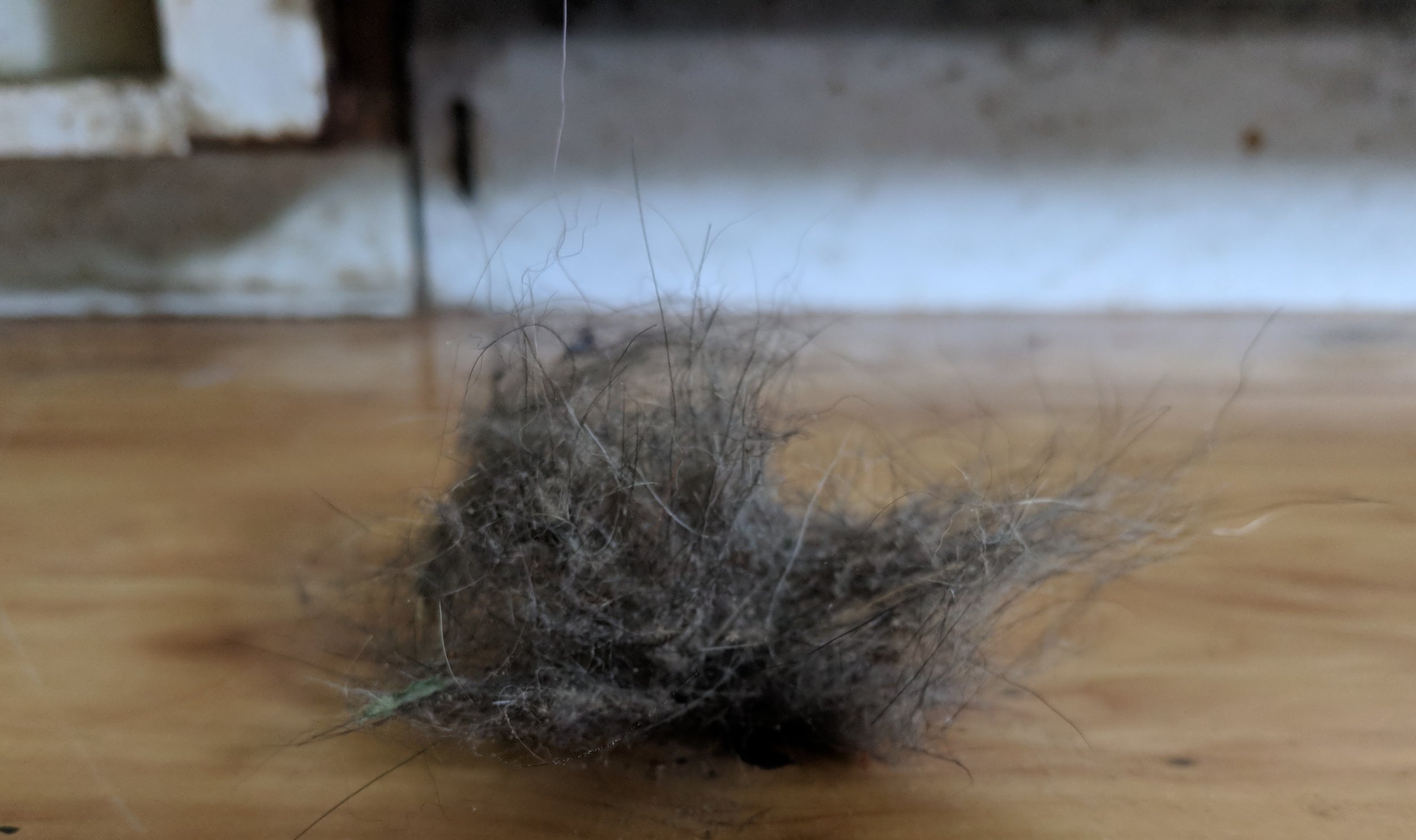
Returned last night from four days' vacation in Chicago, got some sleep, and this morning have embarked on a struggle against pet hair. That our cats missed us is evident in their doting, rubbing, the asking for attention. My daughter brushed enough hair our of each small cat to build a Tribble. The dog, though she got plenty of attention at Mom's house, is nonetheless thrilled to see us and loses more hair when excited. Perhaps in a reference to The Windy City, strong breezes are blowing here in Syracuse rolling pet-hair tumbleweeds through the house. The sight has put me in the mood to clean. 

I've swept the kitchen, first-floor hall, and dining and living rooms. I've swept the upstairs hall and each wooden tread of the stairs. I've vacuumed the den. I even picked up each kitchen chair to clean the accumulated hair on each felt bottom. It felt good to have cleaned the house of pet hair. I scratched "sweep and vacuum" from my to-do list and smiled. 

Then a pet-hair tumbleweed blew across the floor. 

Harry Chapin sang, "it's got to be the going, not the getting there, that's good." I'm pretty sure the only ending in life is death, something toward which I'm in no hurry. Oh, and even if I wanted to, the rest of the family would get rid of me if I got rid of the pets. 

I can sweep, vacuum, but the pet hair will still tumble across our floors. Just now another clump blew up against the refrigerator. Still, I feel good having cleaned a bit. The dog is lying here beside me. The day is cool and breezy. I'm home after a good trip and I'm enjoying this hairy ride, drifting along with the tumbling tumbleweeds. 

July 06, 2018 /Brian Fay
Pets, Cleaning, Home
Whatever Else
  • Newer
  • Older

Subscribe to my weekly newsletter!